School is not only where students learn Mathematics, Science, Languages, and Social Studies; it is also where they learn teamwork, communication, discipline, and how to handle challenges. This blog explains the role of co-curricular activities in school, how they differ from extracurricular activities, how students can balance them with academics, and what parents should look for in a school’s programme.
These activities take many forms, such as sports, debates, music, competitions, art and public speaking, and each one gives students a chance to use what they learn beyond the classroom.
What Are Co-Curricular Activities?
Co-curricular activities are organised by a school for the comprehensive development of a student, apart from academics. Co-curricular activities are designed to improve overall learning of students, so they can develop skills that textbooks alone cannot provide. The National Education Policy (NEP) 2020 also calls for no hard separation between curricular, co-curricular and extra-curricular activities.
Co-curricular activities may include sports, debates, quizzes, Olympiads, public speaking, music, art, cultural programmes, projects, and similar activities. They let students practise skills in real situations instead of only reading about them.
Understand the Difference Between Co-Curricular and Extracurricular Activities
Most people consider co-curricular and extracurricular activities the same, but there is a small difference. Co-curricular activities adopted by a student have a stronger connection with overall educational development, while extracurricular activities are generally pursued outside the core academic programme for interests or personal development.
| Factors | Co-Curricular Activities | Extracurricular Activities |
| Purpose | Support learning and skill development | Explore interests beyond academics |
| Connection with studies | Often linked to classroom learning | Usually separate from classroom subjects |
| Primary Examples | Quiz, debate, Olympiad, science project, educational competition | Hobby club, recreational activity, informal games |
| Skills developed | Communication, reasoning, teamwork, application of knowledge | Creativity, confidence, social skills and personal interests |
| School role | Usually planned as part of the school programme | May be offered through clubs or after-school activities |
For example, a school sports programme may develop both physical fitness and teamwork, while a science competition can strengthen both academic understanding and problem-solving.
Why Do Co-Curricular Activities Matter as Much as Academics?
Academic knowledge gives students a strong foundation, but education becomes more meaningful when students get opportunities to apply that knowledge in various situations. Co-curricular activities provide these opportunities through competition, collaboration, performance, and practical experiences.
- Improves communication skills: Debates, presentations, theatre, quizzes, and public-speaking activities encourage students to express ideas clearly. Regular participation can help students become more comfortable speaking in front of others.
- Builds teamwork: Sports, group projects, and cultural activities require students to cooperate with others. Students learn that achieving a common goal often requires listening, sharing responsibilities, and respecting different viewpoints.
- Improves confidence: Performing on stage, participating in competitions, or representing a school can be challenging at first. Completing these experiences gives students opportunities to overcome hesitation and become more confident in unfamiliar situations.
- Encourages discipline: Regular sports practice, music sessions, or competition preparation require students to follow schedules and remain consistent. This can strengthen time management and the habit of working towards long-term goals.
- Supports practical learning: A classroom may explain a concept, but activities allow students to use it. A science exhibition, mathematics competition, or quiz can turn theoretical knowledge into an active learning experience.
- Helps discover students’ interests: Not every student’s strength is visible through examinations. A student who may be average in one subject could show strong ability in athletics, music, public speaking, chess, art, or another area.
- Supports overall development: A balanced school experience can give students academic knowledge along with physical, social, creative, and emotional skills. These abilities show up later in college interviews, group discussions, presentations and teamwork at the workplace.
Types of Co-Curricular Activities in School
A good school does not need to offer every possible activity, but it should provide students with different ways to participate and discover their strengths.
- Sports activities: Cricket, football, basketball, badminton, athletics, swimming, and other team or individual sports.
- Academic and STEM activities: Olympiads, quizzes, mathematics and science competitions, science exhibitions, and robotics or coding clubs.
- Communication activities: Debates, speeches, presentations, storytelling and public speaking.
- Creative activities: Art, craft, music, dance, theatre and creative writing.
- Leadership activities: Student committees, house activities, event organisation, and community-service or environment drives.
- Cultural activities: Festivals, annual functions and inter-school cultural events.
- Mind and wellness activities: Chess, yoga, meditation and similar activities that encourage focus and mental well-being.
Students can choose activities based on their interests.
How Can Students Balance Academics and Co-Curricular Activities Together?
Instead of treating academics and activities as two separate things, students can use a “Fixed Core + Flexible Activity” strategy for both.
First, students should identify the core academic tasks for the day, such as homework, revision, or test preparation. Students should complete these during fixed study blocks. Then assign a fixed activity slot, such as 45-60 minutes for sports or another interest. On days with tests, reduce the activity time instead of removing it completely.
- Daily: Complete core academic tasks first.
- 5 days a week: Keep a fixed activity period.
- 1 day a week: Review academic progress and activity commitments.
- Before exams: Temporarily reduce activity intensity.
- After exams: Return to the normal activity schedule.
This approach gives students structure without making every day feel overloaded. In board-exam years (Classes 10 and 12), students may need shorter activity slots than in earlier classes. Watch for signs of over-scheduling: constant tiredness, falling test scores, skipped homework, or losing interest in an activity the student once enjoyed. If these appear, reduce the activity load before dropping it altogether.
What Does an Ideal School Co-Curricular Programme Look Like?
An effective co-curricular programme should not simply have a long list of activities. It should give students regular opportunities to participate, practise and improve while keeping academics and well-being in balance. Parents can look for these important elements:
- It should include a variety of activities such as sports, competitions, creative activities, communication and cultural programmes.
- Activities should happen throughout the year rather than only during annual events.
- Coaches, teachers, or mentors should help students improve their skills safely.
- Activities should not be limited to already talented students.
- Students should get opportunities to participate in school, district, state, or national-level events where appropriate.
- Activity schedules should be planned around study, revision, and examination periods.
- Adequate rest, nutrition, supervision, and access to guidance should be part of the programme.
- Schools should encourage students to set goals and review their improvement over time.
Example: How Matrix High School Structures Co-Curricular Activities
To see how these elements work in practice, here is how Matrix High School organises activities across sports, competitions, cultural events and student support.
1. Sports Facilities and Coaching: The school provides facilities for badminton, handball, basketball, football, gym, hockey, lawn tennis, cricket, swimming, kabaddi, kho-kho, athletics, boxing, table tennis, judo and karate, skating, chess, carrom, shooting, yoga and volleyball. Check the complete sports facilities through the attached link: Matrix High School Sports Facilities.
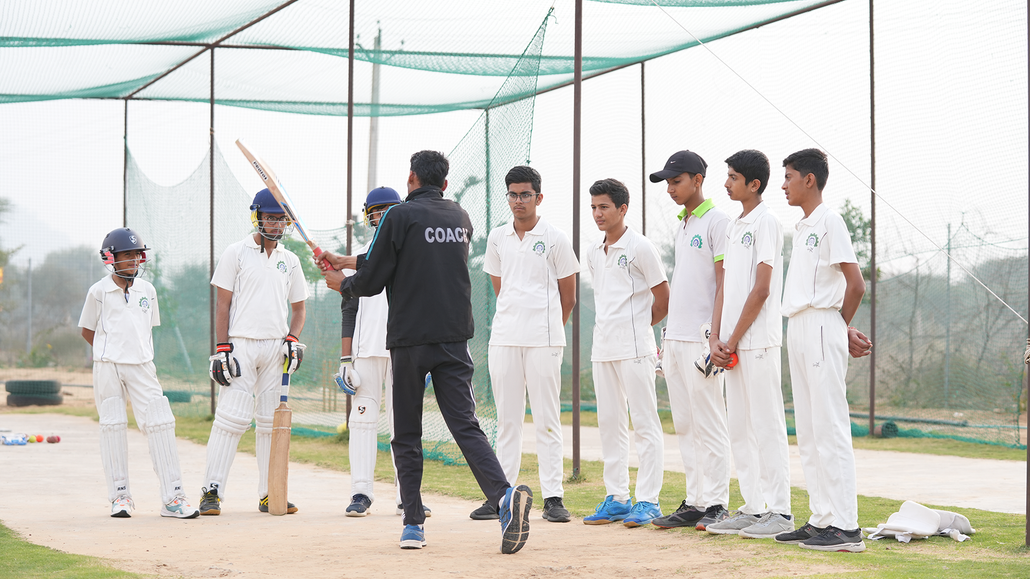
Several activities have dedicated coaching and facilities. Recent school updates also record participation across U-14, U-17 and U-19 categories, including achievements in boxing, swimming, judo, athletics and other sports.
2. Olympiads and Competitive Exam Exposure: Students can participate in the Matrix Olympiad and receive exposure to competitions such as IMO and other national-level Olympiads, alongside JEE and NEET coaching.

The school’s competitive-exam results page provides year-wise information across several such competitions.
3. Annual Events and Stage Opportunities: Students also get opportunities to participate in annual functions, cultural celebrations, stage performances, competitions, and award ceremonies. Spreading these events across the year keeps activities a regular part of school life rather than a once-a-year occasion.

4. Residential Routine and Mentorship: For residential students, a structured campus routine can make it easier to divide the day between classes, supervised study, sports, and other activities. The school also highlights counselling and mentorship as part of its student-support approach.
Whichever school you are considering, the checklist in the previous section is a practical way to compare its programme with others.
Conclusion
A student’s education cannot be measured only through marks. Academic knowledge is important, but many skills students need in college and at work, such as speaking up, working in a team and managing time, are built through practice rather than reading. Co-curricular activities give students that practice while keeping school life engaging. The practical next step is simple: choose one or two activities, give them a fixed weekly slot, review the balance every week, and reduce the load before exams instead of dropping it.
FAQs
Co-curricular activities are school-organised activities such as sports, debates, quizzes, music, art, competitions, and projects that support students’ overall development.
They give students regular practice in speaking, working in teams, managing time and applying classroom knowledge, which marks alone do not show.
Co-curricular activities are generally connected with educational development, while extracurricular activities are usually pursued separately for personal interests or recreation.
They allow students to apply classroom knowledge through quizzes, competitions, projects, exhibitions, and other practical experiences, making learning more meaningful.
Students can participate in sports, Olympiads, debates, public speaking, music, art, cultural programmes, leadership activities, chess, yoga, and similar activities.
Students can complete core academic tasks first, maintain fixed activity periods, reduce activity intensity during exams, and resume regular schedules afterward.
Check whether activities run throughout the year, are open to all students, have trained coaches or mentors, and are scheduled around study and exam periods.